
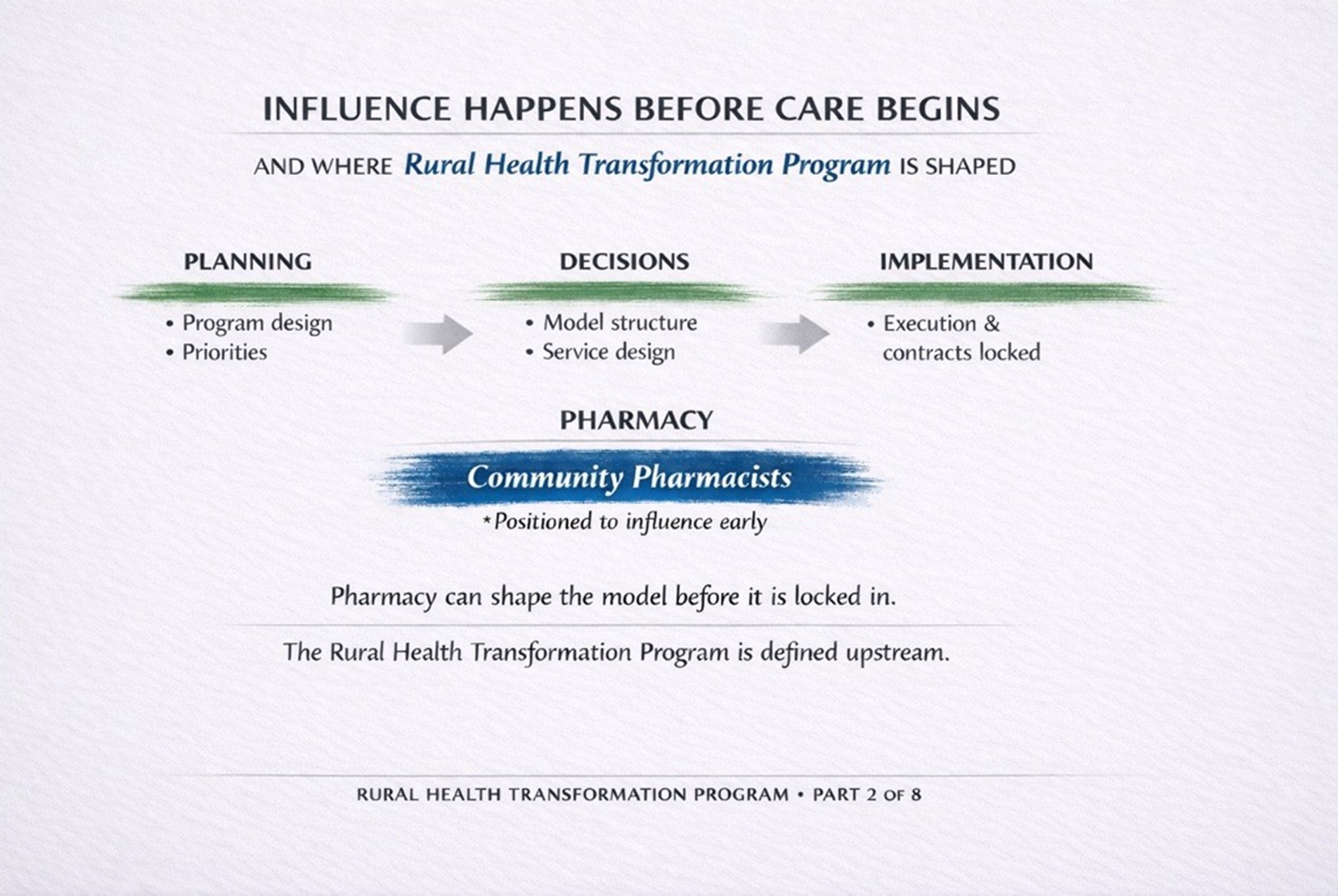
As we begin this new adventure called Rural Health Transformation, it's worth noting that important steps are being taken now. Each state is planning for what comes next, and each is doing it in diverse ways. One thing is certain. The moment when “rural” care is developed, and decided upon, will take place long before any patients receive care.
Not at the bedside. Not at the pharmacy counter. Not even at discharge.
It is happening now as decisions are being made about how care is supposed to work in new models. Over the years, we have all seen many "initiatives" come and go. Many of them were built with the right intentions but fell short in one way or another. The Rural Health Transformation Program offers a pivotal moment for that to change.
And for rural health care to change, delivery must include entire provider teams. I am not just talking about pharmacists. Connecting only a few "links” along the patient care journey often leads to failed programs. If this new focus on rural health is truly about patient care, then all partners of the care team need to be included from the beginning. Pharmacists, Nurses, Community Health Workers, Pharmacy Technicians, Physical Therapists, and so many others add value working together with Primary Care Providers, Hospitals, Federally Qualified Health Centers, Behavioral Health Specialists, and local and state departments of health.
IF “interoperability” is to connect all parts of the care team, then why not plan it that way? Rural patients have unique needs and identifying social determinants of health is critical, as well as assessing behavioral health needs and helping patients get connected to the right providers. We as healthcare professionals must focus on ways to break down barriers for those who lack access to care. We have an opportunity to step outside the box, get rid of it, and develop something new that can stand the test of time. Now is the time to come together and listen to all the voices inside the healthcare team, not just the loudest. Pharmacists are among those who have already been working in this space for years. We are ready and willing to work with others for the betterment of our patients. It is time to see pharmacists as clinical services providers, not just dispensers of pills.
My fear is that once a new care model moves to implementation, decisions about the makeup of the care team will be harder to change. In my experience, the issue is rarely a lack of expertise. Healthcare is full of highly trained, well-intentioned professionals. The challenge is more often a disconnect between how care is designed and how it is experienced by patients in their day-to-day lives. We have a window of opportunity to get this right, let us not waste it.
E.J. Stoepfel RPH, MBA-HCA CPESN USA Payer, Purchaser, Partner Engagement Lead