
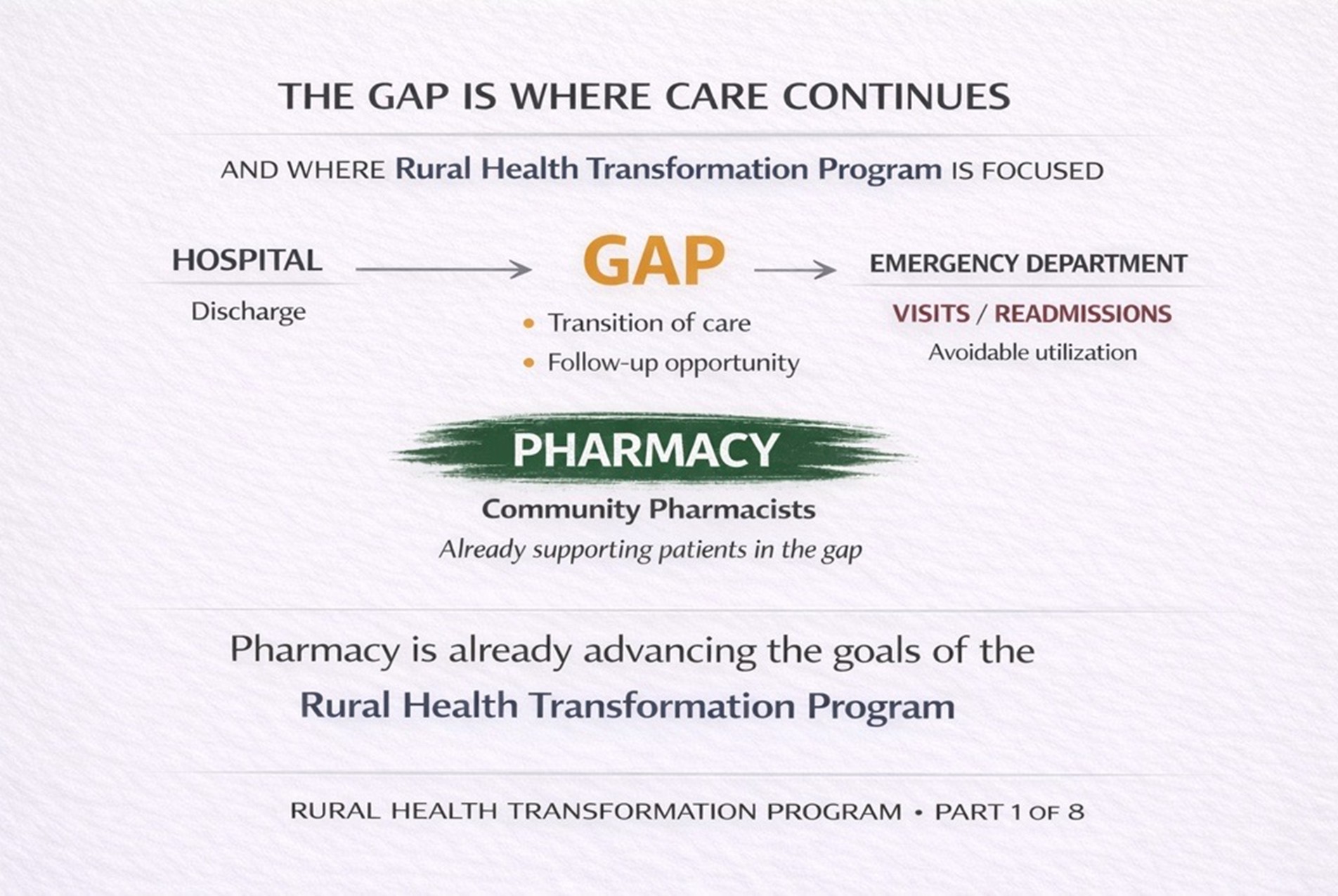
This is the first in a series of posts exploring the role of independent community pharmacies in the transformation of rural health care delivery.
If you have worked in pharmacy long enough, you have seen how fragile the transition after discharge can be. Patients leave with new medications, incomplete understanding, and real-world barriers like transportation, cost, and access. Within days, small issues begin to appear and often escalate. This transition period is where risk accumulates. It is also where meaningful intervention can occur. Community pharmacists have been working in this space for years, addressing medication issues, improving adherence, and helping patients navigate care, at a minimum.
The change that is happening now will impact the next five years and beyond. States are beginning to design models that could change the landscape of rural health. The Rural Health Transformation Program represents a shift toward care that extends beyond traditional settings, emphasizing continuity, coordination, collaboration, and outcomes. Several states are creating emerging models focusing on chronic care management, workforce optimization, and integration of community-based providers, to name a few. These models recognize that care must meet patients where they are.
Community pharmacists represent an existing and accessible, “shovel ready” component of this new paradigm. Pharmacists are often the most consistent point of contact for patients and play a critical role in identifying and addressing issues early.
Sustainability remains the ultimate test. Past programs demonstrate early success but fail without long-term payment alignment. For these models to persist, they must be supported by structures that recognize value over time. Pharmacists are doing so much more than dispensing, and it is time to use the expert that is already in rural communities. This is a critical moment in healthcare. Care models are actively being designed and implemented. The opportunity is to ensure alignment now, before structures are finalized. Pharmacists must engage with stakeholders in their states. If you are waiting for someone to figure it out for you, then you are already behind.